

Not all refractories are created equal: the acidic, basic and neutral classifications help the user in their choice of optimal refractory material.

Iron pyrite is an inexpensive and widely available material that finds use in iron production, affording interesting enhancements to process efficiency and final products.

Ground glass powder is the most common additive in the manufacture of rock/mineral wools for insulation products and other applications.

Anthracite-bentonite is a hardy combination for the removal of contaminants from spills and waste streams

Foundry burn on is a name given to a wide variety of surface defects that are produced at high heat during the metal sand casting process. Carbonaceous materials in the mold, such as high-anthracite coal dust can prevent such defects from forming.

Bentonite is a form of clay that has found numerous uses over its thousands of years of use - but perhaps most notably in foundries from the 1900’s onwards, alongside powdered coal.

Porcelain, whose origin can be traced back to China, can be described as a ceramic material formed by heating various materials together. These materials, including Kaolin which is heated in a kiln to high range temperatures between 1200 and 1400ºC.

Hematite and magnetite are mostly known as sources of iron, but an array of use cases are found when they’re used in soils.

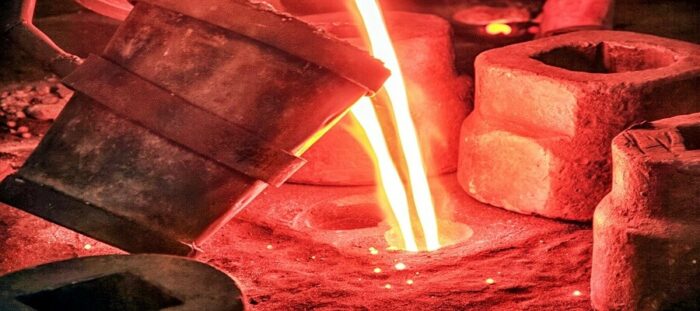
Without tundishes, production of cast metal products would be inefficient and more costly. Through the use of refractory-lined tundishes, the process of metal casting is greatly enhanced.

Hematite finds uses beyond the blast furnace: as an essential component in some modern drilling fluids for oil and gas drilling, the exploration industry highly values hematite for its performance characteristics, high purity and low cost.